Reflection tool
Reflecting on the Ethical and Societal Dimensions of Genomic Innovation in Livestock Breeding
Developed within the framework of the GEroNIMO project, this interactive reflection tool supports professionals and stakeholders in exploring the ethical, societal and practical implications of genomic innovations in farm animal breeding, with a particular focus on pigs and poultry.
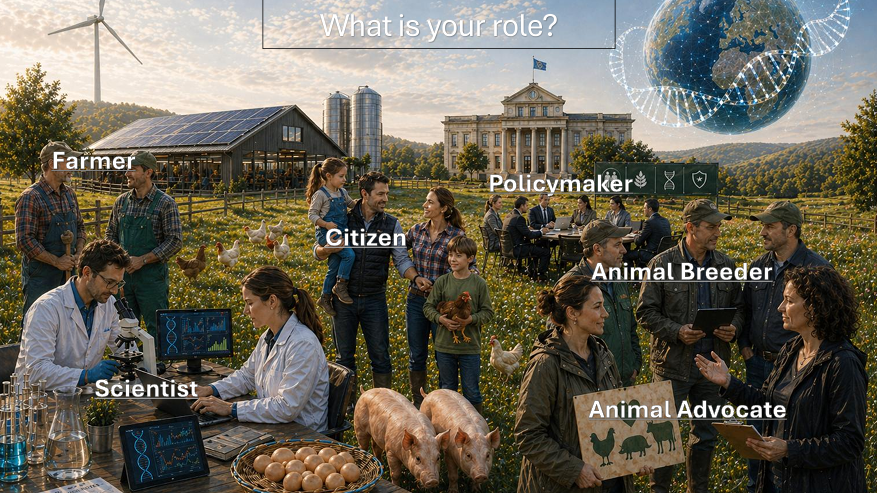
The tool encourages users to reflect on their own values, interests and professional responsibilities while considering the perspectives of other stakeholders, including farmers, scientists, policymakers, citizens, animal advocates, animals and future generations.
Animal breeding technologies are increasingly expected to address not only productivity, but also broader societal challenges such as sustainability, animal welfare, biodiversity conservation, resilience and public trust. At the same time, innovations such as genome editing raise ethical and societal questions related to values, responsibilities and governance.
To address these challenges, Work Package 5 of the GEroNIMO project developed this reflection support tool as part of Deliverable D5.5: Stakeholders devoted tools to deal with genomics innovation.
The tool translates the research conducted within the project into a practical and accessible resource designed to support responsible reflection and dialogue around genomic innovation in livestock breeding.
Why Was This Tool Developed?
The reflection tool aims to help users:
Reflect on their own interests, values and professional responsibilities;
Explore ethical arguments related to genomic innovation in livestock breeding;
Consider the perspectives of different stakeholders;
Identify possible actions and decision pathways;
Support responsible research and innovation practices;
Encourage dialogue and stakeholder engagement.
What Does the Tool Help You Do?
The tool was primarily developed for professionals involved in livestock breeding and innovation, including researchers, breeders, veterinarians, policymakers and industry stakeholders. However, it can also be used by students, educators, civil society organisations and members of the public interested in the ethical dimensions of animal breeding technologies.
Who Is This Tool For?
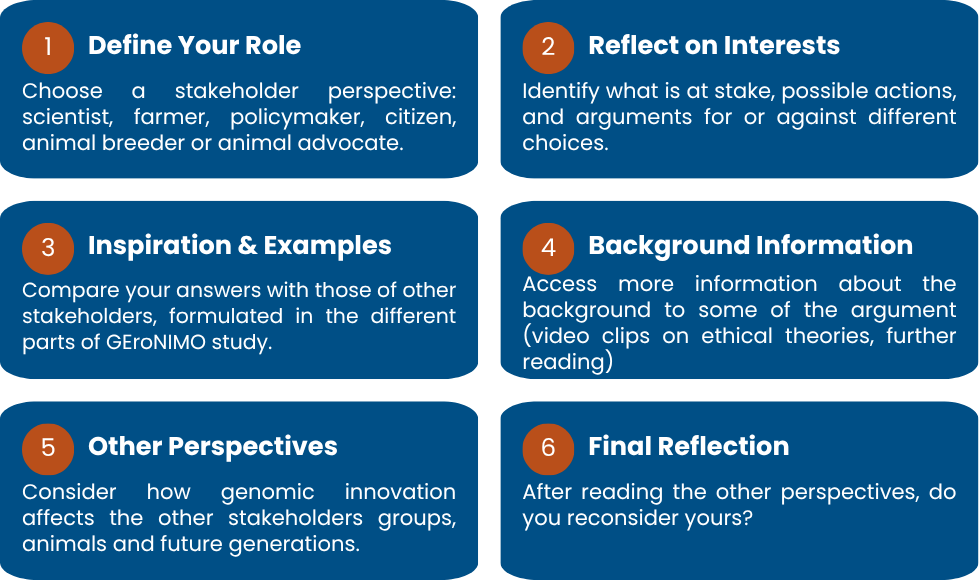
The tool guides users through a structured ethical reflection journey composed of six interactive steps.
How the Tool Works